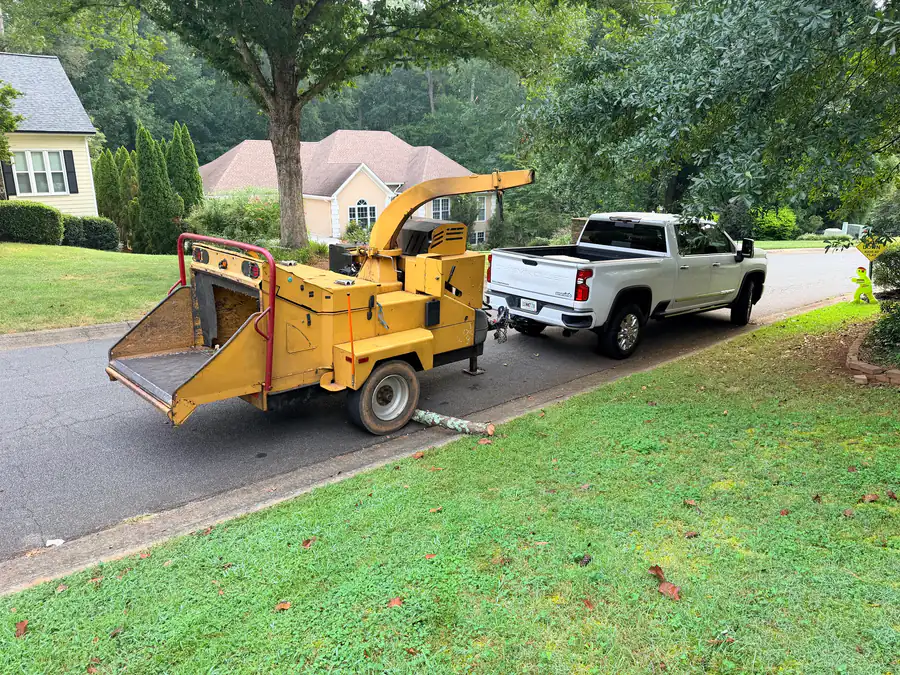
The tree is down, the wood is hauled, the crew is gone, and what is left is a knee-high stump squatting in the middle of your yard like it pays rent. Now you have a decision to make, and the two options sound almost identical: stump grinding and stump removal. They are not identical. They differ in method, in what stays in the ground, in what your yard looks like afterward, and in price, sometimes by a lot. Here is how to choose without overpaying or underthinking it.
The difference in one minute
Stump grinding brings in a machine with a spinning carbide-toothed wheel that chews the stump into chips, working from the top down until the wood sits below grade. The visible stump is gone, the surface can be raked smooth and seeded, and the root system stays in the ground to decay naturally over the following years.
Stump removal means excavation. The entire root ball comes out of the ground, usually with serious equipment, leaving a genuinely empty hole that gets backfilled with soil. Nothing woody remains below the surface where the tree stood.
That is really the whole distinction: grinding erases the stump, removal erases the tree's underground footprint. Everything else follows from that, including the price gap, the amount of yard disturbed, and what you can do with the spot afterward.
When grinding is the right call
For the overwhelming majority of yards, grinding wins, and it is what we recommend most of the time. It is the right choice when:
- You want grass there. A grind plus soil and seed disappears into lawn within a season.
- You are tired of mowing around it, tripping over it, or explaining it to guests.
- Appearance is the goal and nothing is being built on the spot.
- You want the least disruption. Grinders reach spots excavators cannot, and they leave the surrounding yard largely untouched.
- Budget matters. Grinding costs a fraction of excavation, and an average stump is often done within an hour or two.
When full removal earns its price
Removal is the specialist option, and there are three situations where it is genuinely worth the money:
- You are building or pouring over the spot. Footings, a driveway, an addition, a pool deck. Buried wood decays, decayed wood leaves voids, and voids settle. Nobody wants concrete resting on a future air pocket, so the root mass has to go.
- You want a new tree in the same hole. New roots struggle in ground packed with chips and old root wood. If the exact spot matters, excavate.
- The species will not take the hint. A few aggressive species keep sending up shoots from live roots long after the trunk is gone. When regrowth from the root system is the enemy, taking the roots out settles the argument.
If none of those three apply to you, you are probably shopping for a grind.
What happens to the roots after grinding
This is the question underneath most hesitation about grinding, so here is the honest picture. The roots die once the stump is gone and decay slowly over several years, feeding the soil as they go. Along the way you may notice two things, both normal. First, mushrooms: fungi are the demolition crew for buried wood, and an occasional flush after rain means the process is working. Second, settling: as the wood breaks down, the ground above it can dip, so plan on topping up the spot with a little soil once or twice over the years. A few species may also push up sprouts from the roots for a while until the stored energy runs out; mowing them handles it in most cases.
What each one tends to cost
Broad industry ballparks, with the loud caveat that these are not quotes from Elite Catastrophe and every stump prices differently. Typical stump grinding cost for a single stump lands around $100 to $450+, driven by diameter, access, and how many stumps are on the ticket, since multiples usually bring the per-stump number down. Typical stump removal cost runs around $400 to $2,500+ for the same stump, because you are paying for machinery, more labor, haul-off of the root mass, and backfill. That multiple is not padding. Excavation is simply a bigger operation than grinding. The only real number is the one someone gives you after looking at your actual stump, your gate width, and what is buried nearby.
The chips question
Nobody warns first-timers about this: grinding an average stump produces a surprising mountain of wood chips, often several wheelbarrow loads, because the wood fluffs up as it shreds. You have two choices, and it helps to decide before the crew arrives. Keep the chips and they become free mulch for beds and paths, with one note: let fresh chips age before mixing them into planting soil, since raw wood ties up nitrogen as it breaks down. Or have them hauled away and the crew backfills the hole. One more detail worth knowing: a hole backfilled with chips will settle more than one backfilled with soil, so if a flat lawn is the goal, ask for soil in the hole and chips gone.
Before you rent a grinder yourself
Rental yards will happily hand you a stump grinder, and for one small, soft, wide-open stump, a confident DIYer can make it work. Go in with clear eyes, though. Rental units are heavy, physical machines that need a trailer hitch and real respect; they are aggressive tools with exposed cutting wheels. Hidden rock in Northwest Georgia clay eats carbide teeth, and you pay for the teeth. And before anything chews into the ground, call 811 so the utilities get marked, because a buried line near the root ball turns a Saturday project into a very bad month. By the time you add up the rental, the trailer, the fuel, and the day, one professional visit is often within shouting distance of the same money, without the sore back. If you want to see how we handle it, our stump grinding page walks through a typical visit.
Deciding from the deck
Stand where you can see the stump and ask two questions. Will anything ever be built or planted exactly there? Is the species one that fights back from the roots? Two nos means grinding, and you just saved yourself real money. Still at the earlier stage, with the tree upright and the stump hypothetical? Start with our tree removal page instead, and plan the stump at the same time, since grinding on the same visit is the efficient path. We handle both every week across the area, from Rome down to Rockmart and the rest of Polk County. Tell us about your stump and we will give you a straight recommendation and a free estimate.
Stump questions we get weekly
A typical grind runs about 6 to 12 inches below grade, which is plenty for grass, flower beds, and most landscaping. Crews can often grind deeper on request if equipment and soil allow. What grinding does not do is chase the roots, which stay in the ground and decay on their own schedule.
Decaying wood is an open invitation to insects, and termites are on the guest list. A stump left to rot for years is more inviting than no stump at all. Grinding removes the bulk of the food source near the surface, which is one of the quieter reasons people do not leave stumps sitting next to the house.
Not in the exact same hole, ideally. The ground there is a mix of wood chips and old roots, which makes poor rooting soil until it finishes breaking down. Either offset the new tree several feet to the side, or choose full removal up front if planting in that exact spot matters to you.